







Newsletter Subscribe
Enter your email address below and subscribe to our newsletter

Enter your email address below and subscribe to our newsletter
All voices matter
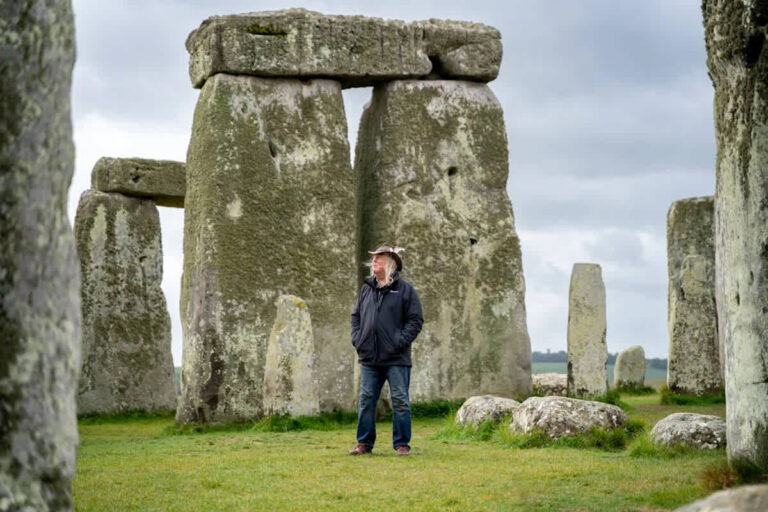
Archaeologists have definitively confirmed that a massive ring of Neolithic pits near Stonehenge represents Britain’s largest known prehistoric structure, resolving a debate that has persisted since the features were first discovered in 2020.
New research published this week in the journal Internet Archaeology establishes that at least 16 enormous pits surrounding Durrington Walls—each measuring up to 10 meters wide and 5 meters deep—were deliberately excavated by humans more than 4,000 years ago. The pits form a near-perfect circle spanning over two kilometers, enclosing an area greater than three square kilometers around the ancient monument, located approximately two miles northeast of Stonehenge.theartnewspaper
The research team, led by Professor Vincent Gaffney of the University of Bradford, employed an unprecedented combination of scientific methods to confirm the pits’ human origins. Using electrical resistance tomography, radar, magnetometry, and sediment core analysis, researchers found repeating patterns in soil samples across different pits that could not occur naturally.theartnewspaper
“They can’t be occurring naturally. It just can’t happen,” Gaffney told The Guardian. “We think we’ve nailed it”.the-independent
Dr. Tim Kinnaird of the University of St Andrews used optically stimulated luminescence dating to pinpoint construction to approximately 2480 BC. “The new dating evidence, coupled with the remarkably consistent geochemical signature seen within the fills at the pits provides definitive evidence that they were constructed by people living at the site over a very short time period,” Kinnaird said.greekreporter
Environmental DNA analysis of soil samples revealed traces of ancient plants and animals, including sheep and cattle, further supporting the structure’s deliberate construction.bbc
The pits’ precise circular arrangement demonstrates remarkable planning and coordination by Late Neolithic communities. Professor Richard Bates from the University of St Andrews noted that “the skill and effort that must have been required to not only to dig the pits, but also to place them so precisely within the landscape is a marvel”.theartnewspaper
Researchers believe the structure served as a sacred boundary linked to ceremonial activities at Durrington Walls, reflecting the cosmological beliefs that shaped the Stonehenge landscape. “These features were not simply dug and abandoned—they were part of a structured, monumental landscape that speaks to the complexity and sophistication of Neolithic society,” Gaffney said.bradford
The discovery forms part of the Stonehenge Hidden Landscapes Project, an international collaboration that continues to reveal unexpected dimensions of one of the world’s most studied archaeological sites.hellorayo