







Newsletter Subscribe
Enter your email address below and subscribe to our newsletter

Enter your email address below and subscribe to our newsletter
All voices matter
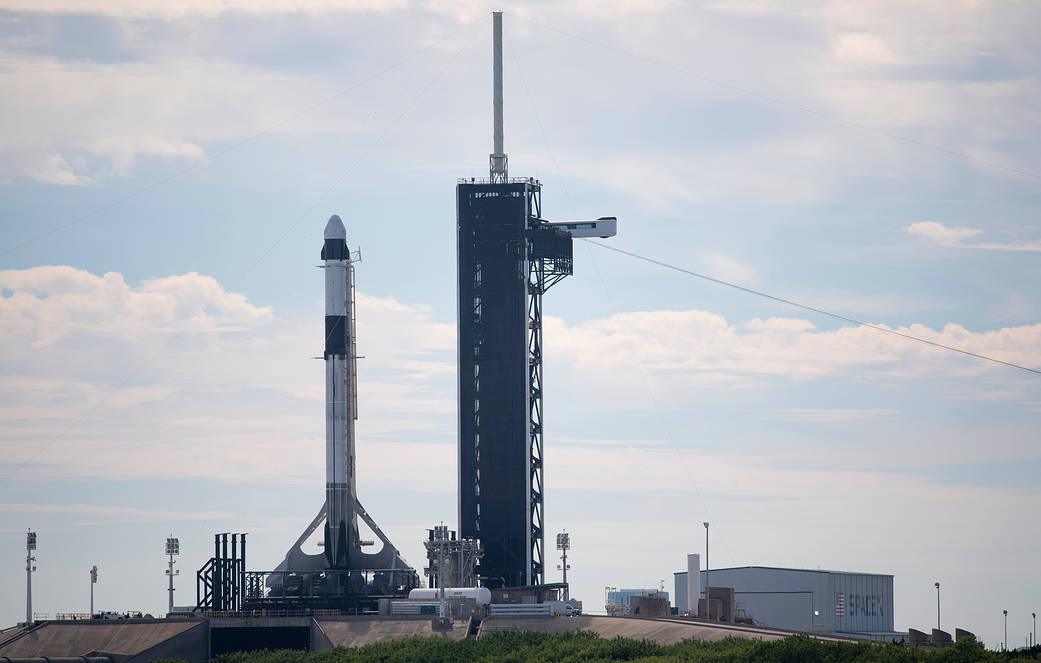
SpaceX’s historic Nasdaq listing, set to begin trading on June 12 under the ticker SPCX after pricing at $135 per share for a record-breaking $75 billion raise, is sending shockwaves through China’s commercial aerospace sector. More than 10 Chinese rocket manufacturers and aerospace suppliers are now racing toward public listings on Shanghai’s STAR Market or in Hong Kong, according to industry reports, as the SpaceX debut reshapes how the sector approaches capital markets.cnbc
The IPO momentum in China’s commercial space sector has been building since late 2025. LandSpace, a Beijing-based rocket maker, became the first Chinese commercial launch provider to have its STAR Market listing application accepted in December 2025, aiming to raise 7.5 billion yuan ($1.1 billion). CAS Space, incubated by the Chinese Academy of Sciences, completed its IPO tutoring process in January 2026.caixinglobal
Other firms including Galactic Energy and Space Pioneer have also accelerated their listing processes, according to the Global Times. The push was enabled by new Shanghai Stock Exchange guidelines issued in December 2025 that established a clear pathway for commercial rocket firms to list under the STAR Market’s fifth set of listing standards, which accommodate pre-profit technology companies.globaltimes
China now has more than 600 commercial space enterprises, with the industry reaching a scale of 2.5 to 2.8 trillion yuan in 2025. Annual financing hit 18.6 billion yuan in 2025, up 32 percent year on year.qstheory
The irony for Chinese investors is that SpaceX has barred participation from mainland China and Hong Kong in its IPO, citing regulatory and compliance concerns. SpaceX’s website and marketing documents were inaccessible in both territories, according to Reuters. This exclusion has driven Chinese investors to seek proxy plays through supply-chain stocks and space-linked ETFs.reuters
Separately, China’s space-insurance industry has shifted into high gear, with a wave of domestic insurers now underwriting rockets and satellites, according to the South China Morning Post. The coverage provides a financial backstop against catastrophic losses during launches and orbital operations — turning space risk into a new dimension of the broader China-US technology rivalry. The global space insurance market is valued at roughly $4.4 billion in 2026.researchandmarkets
SpaceX’s IPO, which values the company at approximately $1.77 trillion, is expected to price after market close on June 11. For China’s commercial space entrepreneurs, the listing serves as both a benchmark and a catalyst — proof that private rocket companies can command extraordinary valuations in public markets.heygotrade