Newsletter Subscribe
Enter your email address below and subscribe to our newsletter

Enter your email address below and subscribe to our newsletter
All voices matter
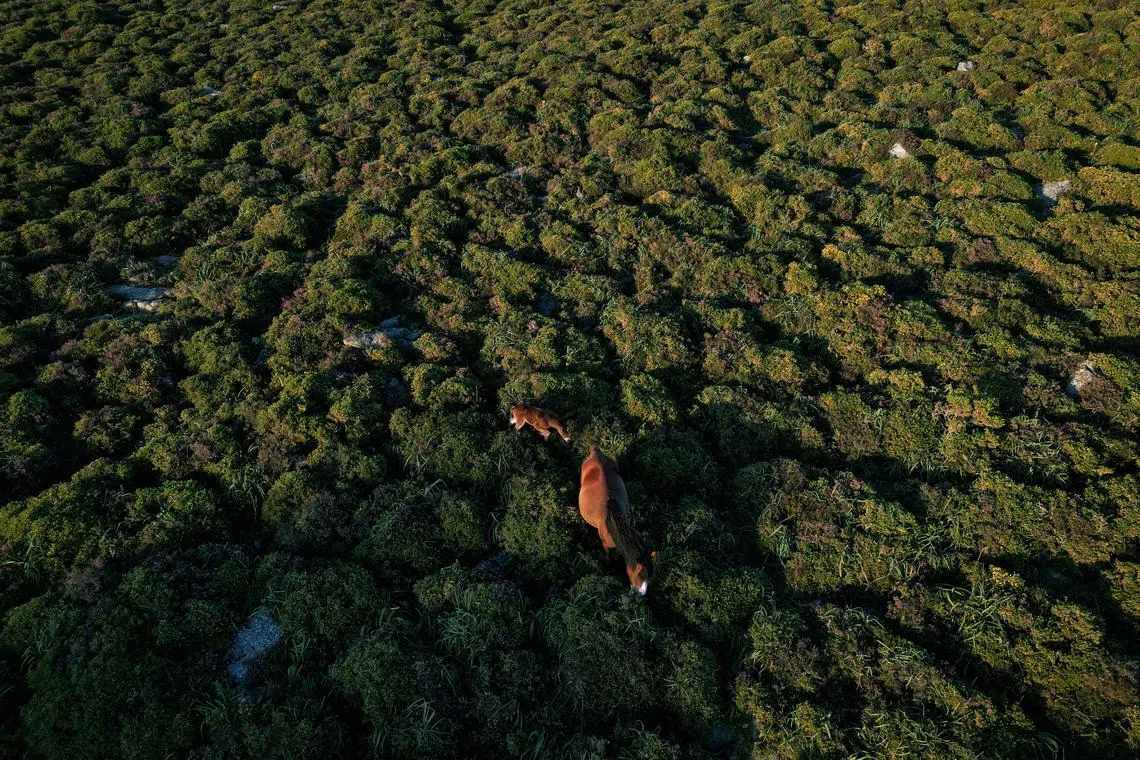
Financial markets are “effectively blind” to the economic risks of biodiversity loss, which could expose nations to sovereign debt crises and add $162 billion to annual global borrowing costs, according to research published on Friday — World Environment Day.
The study, published in Nature Ecology & Evolution, was led by economists from the Universities of Sussex, Sheffield, and Heriot-Watt. It presents what the authors describe as the world’s first biodiversity-adjusted sovereign credit ratings model, warning that existing ratings frameworks fail to account for environmental degradation, leaving some $83 trillion of global assets vulnerable to mispricing.straitstimes
Using a modified version of S&P Global’s ratings methodology, the researchers estimated that even a partial collapse of key ecosystems — including wild pollinators, marine fisheries, and tropical forests — could cut global GDP by around $2 trillion per year. The resulting credit downgrades would raise annual sovereign debt interest payments by $162 billion across the 23 nations studied.themalaysianreserve
India’s sovereign rating could fall by four notches under such a scenario, while China’s could drop by more than five on a 20-point scale. Those downgrades would add roughly $50 billion to India’s annual debt interest bill and $70 billion to China’s, according to Reuters. Indonesia, Bangladesh, and Malaysia could face rating cuts of four to six notches.reuters
“Financial markets are effectively blind to nature-related risks,” said the University of Sussex’s Matthew Agarwala. “As biodiversity loss undermines economic performance, it becomes harder for countries to service their debt, raising borrowing costs and fiscal strain.”straitstimes
The researchers warned that sovereign downgrades would ripple across domestic economies, affecting businesses, financial institutions, and pension funds. Pati Klusak of Edinburgh Business School said the findings echo past financial crises: “The 2008 global financial crisis showed what happens when markets ignore emerging threats. We risk repeating that mistake if ecological risks remain excluded from credit assessments.”straitstimes
The additional debt servicing costs would represent nearly three-quarters of global annual overseas development aid and a large portion of the UN Global Biodiversity Framework’s target of mobilizing $200 billion annually across 196 countries.straitstimes
The study builds on earlier work from 2022 by some of the same researchers at Cambridge, which estimated biodiversity-linked borrowing cost increases at $53 billion for 26 countries. The updated figures reflect expanded modeling and worsening ecological trends.cam
Moritz Kraemer, a former sovereign analyst at S&P Global who contributed to the research, said rating agencies are failing to account for long-term environmental risks. “By the time these bonds mature in 30 years or even 50 years they could be 3-4 notches lower,” Kraemer said. “That is a problem.”straitstimes
A separate study published in March by the London School of Economics’ Grantham Research Institute found that nature degradation already adds 25 to 70 basis points to sovereign borrowing costs, with the effect up to three times larger for lower-income countries in Africa and Asia.lse