







Newsletter Subscribe
Enter your email address below and subscribe to our newsletter

Enter your email address below and subscribe to our newsletter
All voices matter
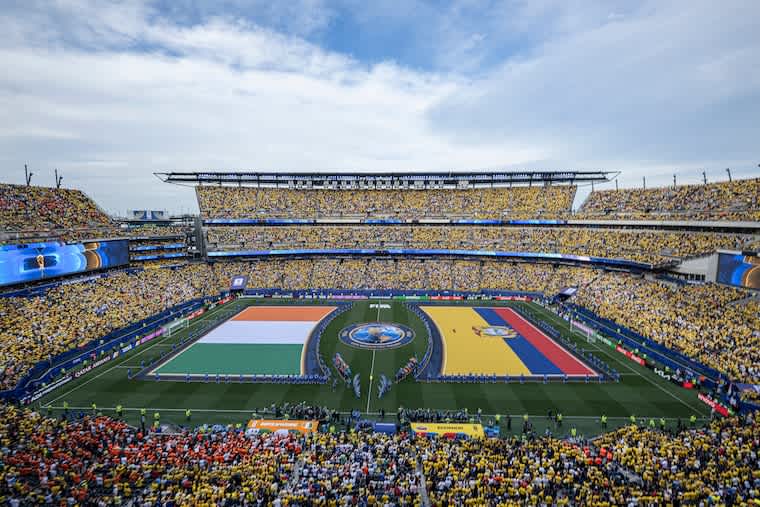
The 2026 FIFA World Cup, now underway across North America, is projected to deliver a $45 billion boost to global GDP, according to Bank of America analysts, dwarfing the economic footprint of Taylor Swift’s record-breaking Eras Tour.barrons
The Bank of America forecast, published this week, estimates the tournament will add $19 billion to U.S. GDP alone, making it roughly 2.2 times more economically productive than the Eras Tour on a domestic basis. The projection builds on earlier FIFA-commissioned research that estimated $40.9 billion in global GDP generation and 824,000 full-time jobs worldwide.weforum
BMO Economics has separately projected that host cities could anchor up to $81 billion in broader soccer-related economic activity. Analysts at Allianz Trade have placed North America’s direct tournament benefit at $9.1 billion, with the U.S. capturing $6.1 billion, Mexico $1.7 billion, and Canada $1.3 billion.youtube
Across the Atlantic, where fans are watching from home due to the late-night kick-off times, the economic ripple effects are equally notable. Analysis from money.co.uk forecasts a £7.6 billion boost to the UK economy between May and July, with the hospitality sector leading the charge. Food and drink businesses are expected to see revenues rise by £4.2 billion — a 9.3 percent increase over a typical summer — while sports and recreation industries could gain £3.1 billion.yahoo
Pub bookings to watch England’s opening World Cup match surged 293 percent, with hospitality venues anticipating a 42 percent sales boost during tournament fixtures. The late-night scheduling of matches for UK audiences has created an unusual boon for convenience retailers, with analysts forecasting that spending at corner shops could rise by as much as 8.5 percent during England matches.yahoo
Not all the effects are positive. Analysts warn that millions of UK employees are likely to call in sick, work remotely, or take unofficial leave following late-night games, creating a drag on workplace productivity. Some retail analysts have also questioned whether the projected spending boosts will materialize fully, with Circana cautioning that tournament-related uplifts may be more modest than headline figures suggest.conveniencestore
Still, with more than five billion people expected to engage with the tournament globally, the 2026 World Cup is shaping up as one of the largest single-event economic catalysts in recent memory.facebook