







Newsletter Subscribe
Enter your email address below and subscribe to our newsletter

Enter your email address below and subscribe to our newsletter
All voices matter
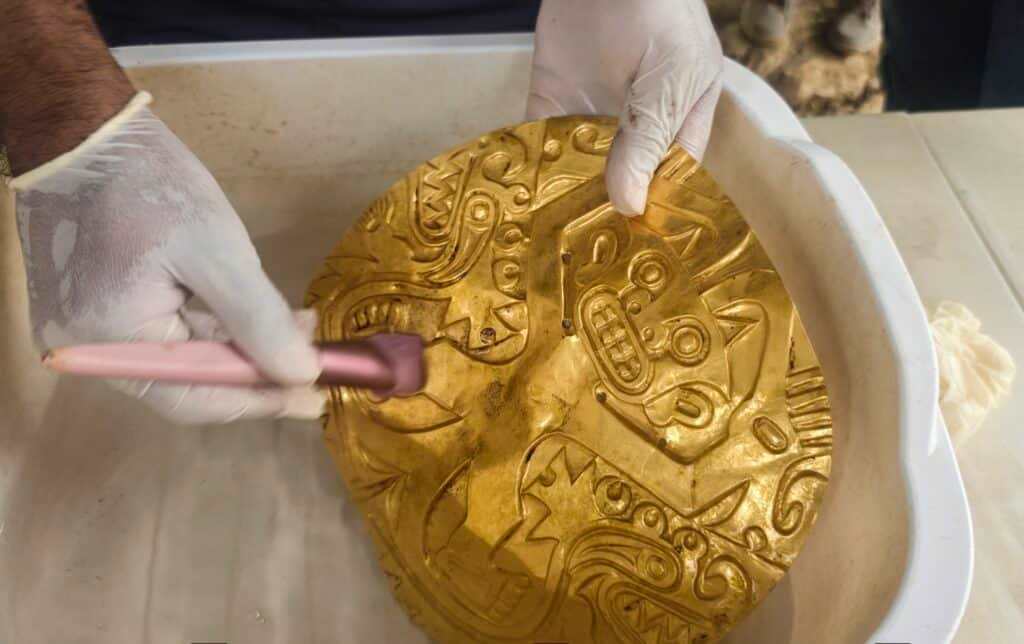
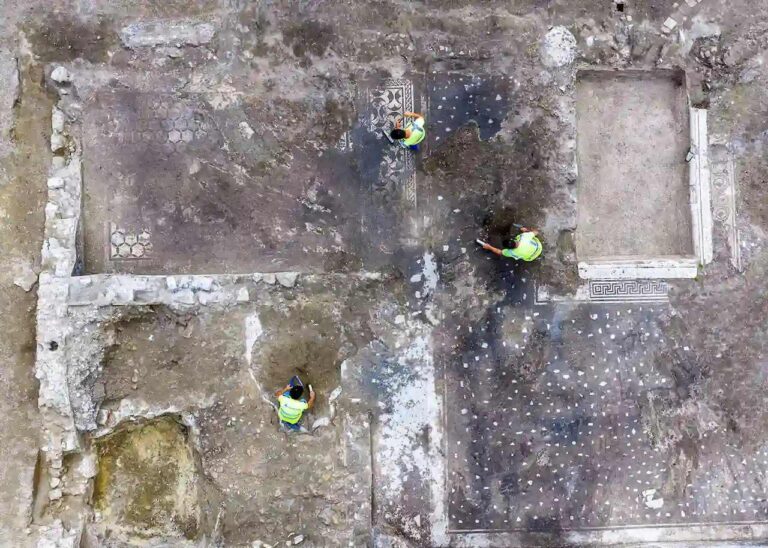
Archaeologists in Panama have completed the excavation of a tomb more than a thousand years old at the El Caño archaeological site, uncovering human remains alongside gold and ceramic artifacts that shed new light on pre-Hispanic societies in Central America.
The find, designated Tomb 3, was announced Friday by Panama’s Ministry of Culture and the El Caño Foundation. The tomb, located in the Natá district of Coclé province roughly 200 kilometers southwest of Panama City, revealed a multiple burial led by a principal individual of apparent high rank, surrounded by gold pectorals, bracelets, and earrings, as well as finely crafted pottery bearing traditional iconographic motifs.nbcrightnow
“The individual with the gold was the one with the highest social status in the group,” archaeologist Julia Mayo, director of the El Caño Foundation and leader of the excavation, told AFP. She told EFE that the gold funerary goods — two pectorals, two bracelets, and two earrings — “are indicating the rank of the person,” noting that not all those interred in Tomb 3 held the same status.efeservicios
The principal figure was found in an extended position, accompanied by several other individuals in what researchers describe as a complex funerary structure. The tomb dates to between the 8th and 11th centuries, a period when El Caño served as a necropolis for the societies that inhabited central Panama. Mayo told AFP that the site was used as a burial ground “for 200 years”.nbcrightnow
Tomb 3 was first identified in 2009, when surveys detected concentrated deposits of ceramic fragments and metal pieces at the site. The excavation was completed during the 2026 field season, funded by Panama’s Ministry of Culture in collaboration with the El Caño Foundation.tvn-2
It is one of nine tombs explored at El Caño since formal excavations began in 2008. Previous discoveries at the site include the so-called “Lord of the Flutes,” a Coclé lord found in Tomb 9 in 2024 buried with gold breastplates, belts of gold beads, bone flutes, and as many as 31 sacrificial companions.eldigitalpanama
Panama’s Culture Minister María Eugenia Herrera visited the site and said the government is focused on developing a museum at El Caño as “a center for research and education for all Panamanians and visitors interested in our origins and our history”.eldigitalpanama
The Ministry of Culture said the discovery is “of great importance for Panamanian archaeology and the study of pre-Hispanic societies of the Central American isthmus”. Researchers noted that stylistic and technological similarities between artifacts found at El Caño and at nearby Sitio Conte reinforce the hypothesis that these communities shared a common cultural tradition and maintained close political and economic ties.laestrella