






Newsletter Subscribe
Enter your email address below and subscribe to our newsletter

Enter your email address below and subscribe to our newsletter
All voices matter
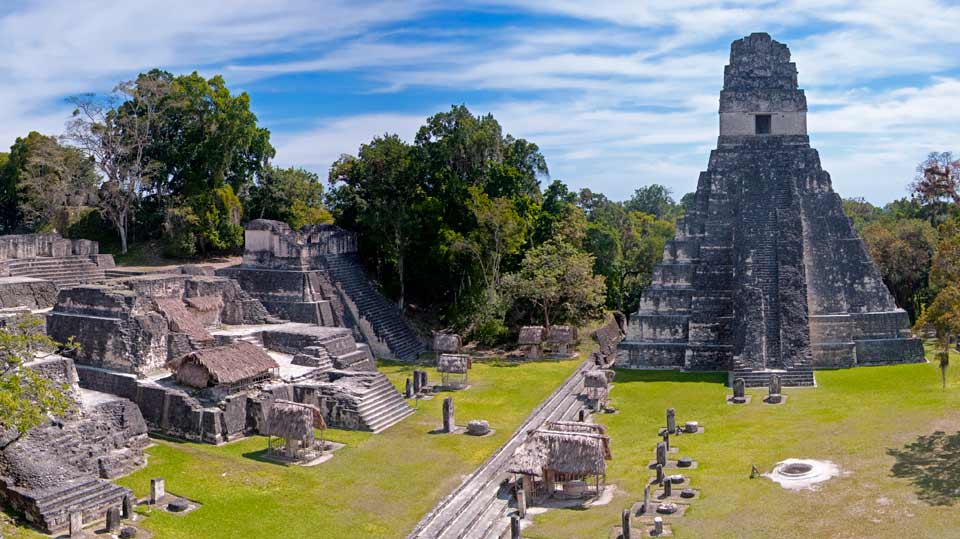
A stalagmite deep within a Mexican cave has revealed that a devastating 13-year drought helped drive the collapse of the Maya civilization around 1,000 years ago, according to research published today in Science Advances. The study provides the most detailed climate record yet of the Terminal Classic period, offering new insights into one of archaeology’s most enduring mysteries.livescience
Researchers led by Daniel H. James from the University of Cambridge analyzed oxygen isotopes in a stalagmite from Tzabnah Cave in Mexico’s Yucatán Peninsula to reconstruct seasonal rainfall patterns between 871 and 1021 CE. The findings reveal eight wet-season droughts lasting more than three years during this period, with the longest extending for 13 consecutive years—longer than any drought in the region’s recorded history.cam
The breakthrough lies in the study’s ability to isolate individual wet and dry seasons rather than just annual averages, something previously impossible with lake sediment records. “Knowing the annual average rainfall doesn’t tell you as much as knowing what each individual wet season was like,” James explained. “Being able to isolate the wet season allows us to accurately track the duration of wet season drought, which is what determines if crops succeed or fail.”phys
The stalagmite’s annual growth layers, each about 1mm thick, act like tree rings to preserve climate information. Chemical analysis showed that between 871 and 1021 CE, the Maya region experienced 44 years of extreme drought conditions out of the civilization’s final two centuries.cam
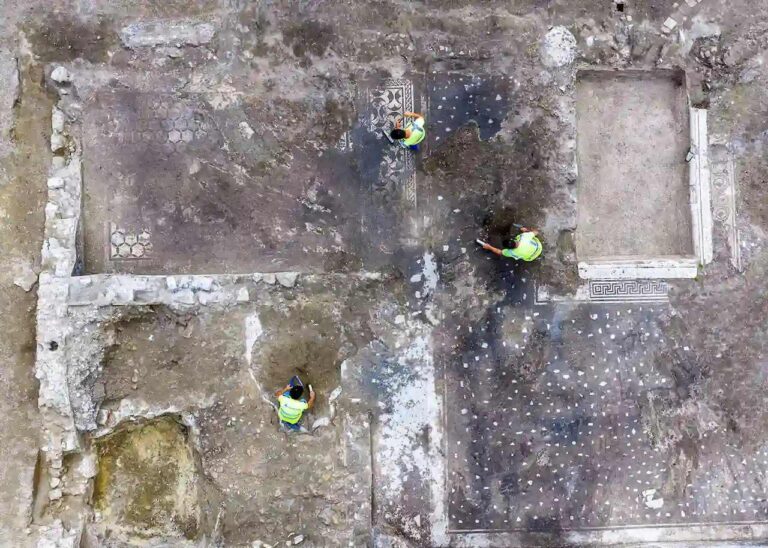
The drought chronology extracted from the stalagmite correlates precisely with archaeological evidence of Maya political decline and site abandonment across the Yucatán Peninsula. Monument construction and date inscriptions ceased at major sites like Chichén Itzá during periods of severe drought, though the timing varied significantly between different centers. At Uxmal, the regional political system collapsed shortly after the most devastating 13-year drought, while Chichén Itzá demonstrated greater resilience, likely due to its extensive trade networks that enabled resource importation from central Mexico.livescience
The differential responses between Maya centers challenge simplistic drought-abandonment theories, revealing instead a complex pattern where water management infrastructure and trade connectivity determined survival. While Chichén Itzá controlled “a vast system of tribute collection” that helped it weather multiple drought cycles, smaller or less connected polities faced complete collapse. This variability suggests that drought acted as a catalyst rather than a uniform cause, amplifying existing vulnerabilities in Maya social and economic systems during the Terminal Classic period.popular-archaeology
The research builds on decades of drought theory development. Since the 1990s, scientists have suspected climate played a role in Maya collapse, but previous studies provided only qualitative data about whether conditions were “wetter” or “drier”. Earlier work by Cambridge’s David Hodell found that the period from 800-1000 CE represented the most severe drought in 7,000 years, with rainfall reduced by 41-70% during peak conditions.ssbcrack
Some experts caution against oversimplifying the Maya collapse. Scott Fedick from UC Riverside argues the new study underestimates Maya resilience, noting that drought-resistant perennial plants could have supplemented failed annual crops like maize. However, historian Rafael Cobos from Mexico’s Autonomous University of Yucatán contends that “the Maya civilization, with its society that depended on maize cultivation for food, could not sustain its large population” under such extreme conditions.elpais
The study demonstrates how advanced water management systems, including reservoirs and cisterns, ultimately proved insufficient against prolonged drought. As James observed, “13 years of wet-season drought could mean 13 consecutive failed harvests—we know from the modern world how devastating that can be.”livescience