Newsletter Subscribe
Enter your email address below and subscribe to our newsletter

Enter your email address below and subscribe to our newsletter
All voices matter
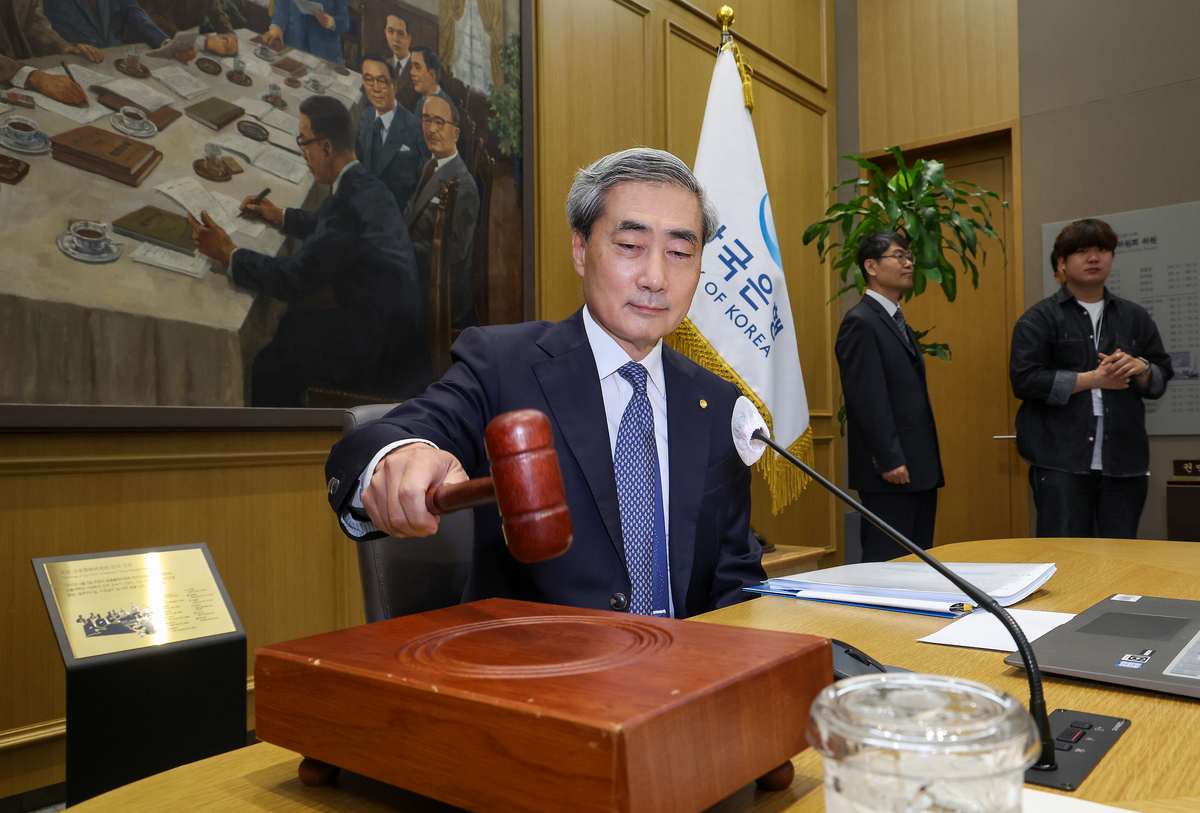
Central banks from Seoul to Frankfurt are pivoting toward tighter monetary policy as the war in Iran sends energy prices surging and drives inflation above targets across major economies. On Friday, the Bank of Korea’s governor declared it was time to raise interest rates, while Germany’s Bundesbank published a forecast showing inflation running well above the European Central Bank’s target through 2027.
Bank of Korea Governor Shin Hyun-song said Friday that it is “essential to adjust interest rates in a timely fashion, prioritizing price stability,” as inflation is expected to remain above the central bank’s 2% target for an extended period. Consumer inflation in South Korea accelerated to 3.1% in May, a two-year high driven primarily by oil prices stemming from the Middle East conflict. Petrol and diesel costs were 24.2% higher than a year ago.riotimesonline
The BOK held rates at 2.5% at its May meeting in a 5-2 vote, but the two dissenting members pushed for an immediate hike, and the bank’s dot plot signaled a hawkish shift. The next policy meeting is scheduled for July 16. Economists surveyed by The Korea Economic Daily expect at least two rate increases this year, bringing the benchmark to 3.0%.yahoo
The Bundesbank on Friday published its latest forecast for Germany, projecting inflation of 2.9% in 2026 and 2.7% in 2027 as measured by the Harmonised Index of Consumer Prices — up from its December projections. The central bank simultaneously cut its calendar-adjusted GDP growth forecast to 0.5% for 2026, down from 0.6% previously, and trimmed 2027 growth to 0.8% from 1.3%.bundesbank
The forecast, titled “Energy price shock fuels inflation and slows the economic recovery,” reflects the impact of higher oil and gas prices flowing from the Iran conflict. Germany’s consumer price inflation reached 2.6% in May.destatis
Brazil’s annual inflation rate rose to 4.72% in May, breaching the top of the central bank’s 1.5-to-4.5% tolerance band around its 3% target. The acceleration from 4.39% in April was driven by food, beverages, and energy costs linked to elevated oil prices.ibge
The breach complicates the outlook for the central bank’s June 16-17 meeting. After cutting its Selic rate by 25 basis points to 14.50% in May, the bank had left its next move open amid uncertainty tied to the Iran conflict and a potential El Niño supply shock. Economists surveyed by the central bank project inflation will close 2026 at 5.04%.reuters
In Italy, the Bank of Italy projected in April that inflation would reach 2.6% in 2026, up a full percentage point from its December estimate, citing the surge in commodity prices. The European Commission’s May forecast was even more stark, projecting Italian inflation at 3.2% this year.reuters