Newsletter Subscribe
Enter your email address below and subscribe to our newsletter

Enter your email address below and subscribe to our newsletter
All voices matter
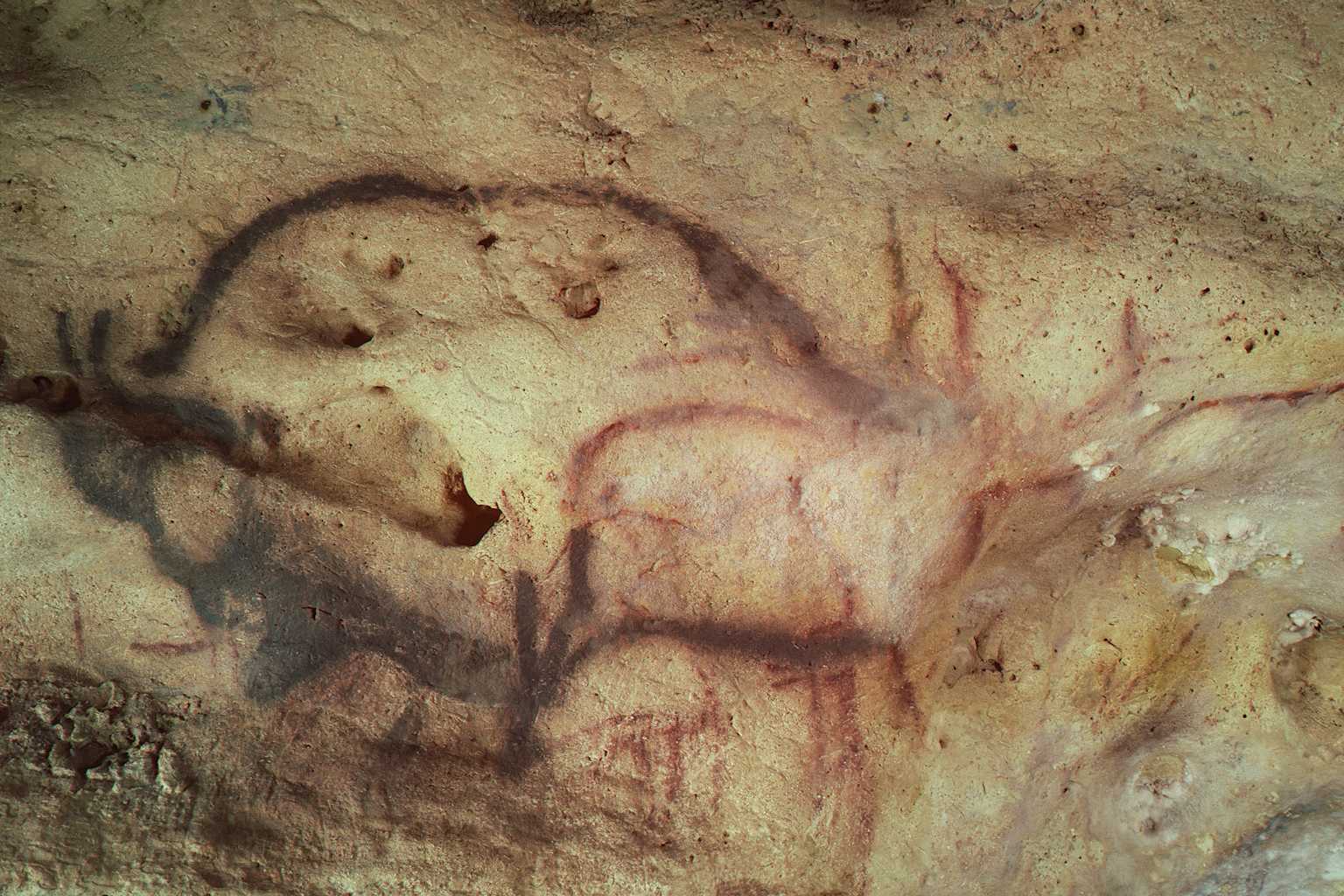
Scientists have for the first time directly dated the cave paintings at Font-de-Gaume in the Dordogne region of southwestern France, revealing that a bison figure was drawn between 13,461 and 13,162 years ago. The results, published March 9 in the Proceedings of the National Academy of Sciences, overturn long-held assumptions about the pigments used in one of Europe’s most celebrated prehistoric art sites and open the door to dating Paleolithic artwork across the region.acs
The breakthrough traces back to a discovery made in February 2020 by a team led by Ina Reiche, a research chemist at the French National Center for Scientific Research (CNRS). Since the cave’s discovery in 1902, it had been widely accepted that the drawings of bison, horses, and other large animals were made exclusively with inorganic iron and manganese oxide pigments — materials that cannot be radiocarbon dated. No study had ever confirmed the absence of carbon.nih
Using non-invasive techniques including Raman microspectrometry, portable X-ray fluorescence, and hyperspectral imaging, Reiche’s team examined two black drawings — a bison and an abstract mask figure — and found traces of charcoal in the black pigments. The uniform presence of charcoal throughout the lines ruled out contamination from tourists or graffiti in the cave, which has been open to visitors for over 120 years.cnrs
“Until our experiments, nobody could really give experimental proof that these paintings are indeed Paleolithic,” Reiche told Chemical & Engineering News.acs
With evidence that the drawings contained carbon, French authorities granted exceptional permission to collect tiny pigment samples from the UNESCO World Heritage site. The team gathered four micro-samples — one from the bison and three from different parts of the mask — and used accelerator mass spectrometry to measure carbon-14 concentrations.cnrs
The bison dated to between 13,461 and 13,162 calibrated years before present, somewhat more recent than the 18,000-to-16,000-year estimate that had been based on stylistic comparisons alone. Parts of the mask yielded dates between roughly 15,981 and 14,246 years ago, though one sample from the mask’s left eye was markedly younger — dating to between 8,993 and 8,590 years ago — possibly the result of retouching, contamination, or later graffiti.acs
Inés Domingo Sanz, an archaeologist at the Catalan Institution for Research and Advanced Studies who was not involved in the study, called the work a model for ethical sampling of ancient cave art. “Any opportunity we have to obtain dates is really important, because it helps us fix the art to particular periods of time,” she told C&EN, while noting that additional samples would strengthen the findings.acs
The methodology could now be applied to other decorated caves across the Dordogne, a region home to more than 200 Paleolithic sites including the famous Lascaux cave, where direct dating has similarly eluded researchers.nih