






Newsletter Subscribe
Enter your email address below and subscribe to our newsletter

Enter your email address below and subscribe to our newsletter
All voices matter
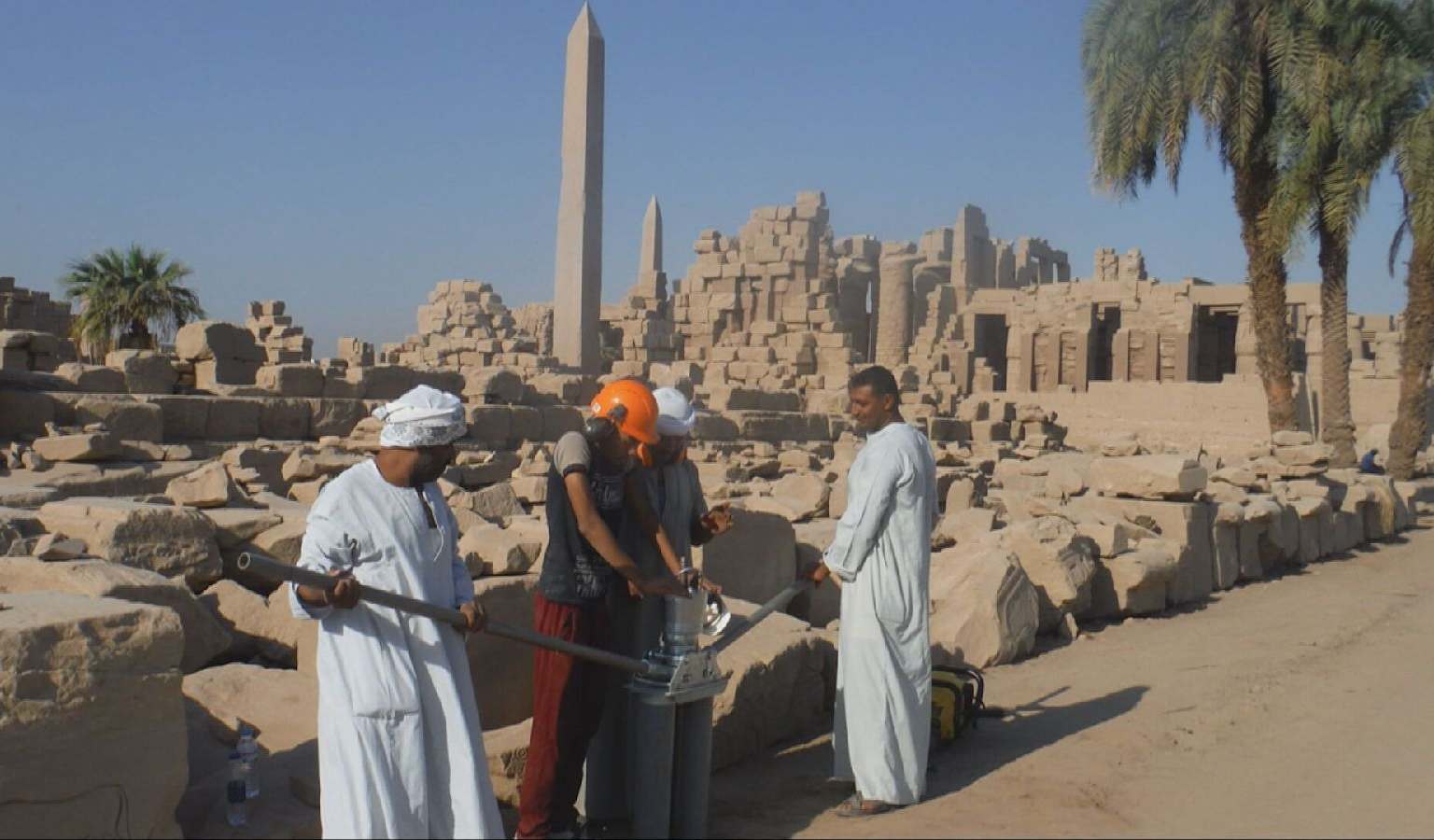
A groundbreaking geoarchaeological study published today has revealed how Egypt’s legendary Karnak Temple evolved from a sacred island amid Nile floods to become one of ancient civilization’s most enduring religious centers, settling a long-standing archaeological debate about its age and origins.
The comprehensive research, led by an international team from the University of Southampton and Uppsala University, confirms that Karnak Temple near Luxor was established approximately 4,000 years ago during Egypt’s Old Kingdom period. The findings, published in the journal Antiquity, provide the most detailed analysis yet of the UNESCO World Heritage site that welcomes millions of visitors annually.msn
The study revealed a remarkable connection between the temple’s location and ancient Egyptian mythology. Researchers discovered that Karnak was deliberately built on an island of high ground that emerged from surrounding Nile River channels—a landscape that directly mirrored the Egyptian creation myth where the first land rose from primeval waters.sciencedaily
“It’s tempting to suggest the Theban elites chose Karnak’s location for the dwelling place of a new form of the creator god, ‘Ra-Amun,’ as it fitted the cosmogonical scene of high ground emerging from surrounding water,” said Dr. Ben Pennington, lead author and Visiting Fellow in Geoarchaeology at the University of Southampton.miragenews
The research team analyzed 61 sediment cores and tens of thousands of ceramic fragments to reconstruct how the landscape changed over three millennia. Their analysis showed that before 2520 BCE, the site would have been unsuitable for permanent occupation due to regular flooding from fast-flowing Nile waters.phys
The study uncovered evidence that ancient Egyptians actively modified their environment to enhance the temple’s religious symbolism. As the annual floods receded, the temple mound appeared to “rise” from the waters, recreating the mythological scene of creation each year.thedebrief
“We also see how Ancient Egyptians shaped the river itself, through the dumping of sands from the desert into channels, possibly to provide new land for building,” explained co-author Dominic Barker from the University of Southampton.thenationalnews
The research team made surprising discoveries about the site’s geography, finding that an eastern river channel—previously just theoretical—was more defined and possibly larger than the western channel that archaeologists had focused on for decades. These channels eventually diverged, creating additional space for the temple complex to expand over centuries.sciencedaily
The findings resolve a heated archaeological debate about Karnak’s construction date. “Two primary theories have competed: one suggesting the temple could date back to around 3000 BC, and the other proposing a later date, around 2000 BC,” Dr. Pennington explained. “Our research indicates that the earlier date is not feasible, and the later date is substantiated by the evidence”.msn