







Newsletter Subscribe
Enter your email address below and subscribe to our newsletter

Enter your email address below and subscribe to our newsletter
All voices matter
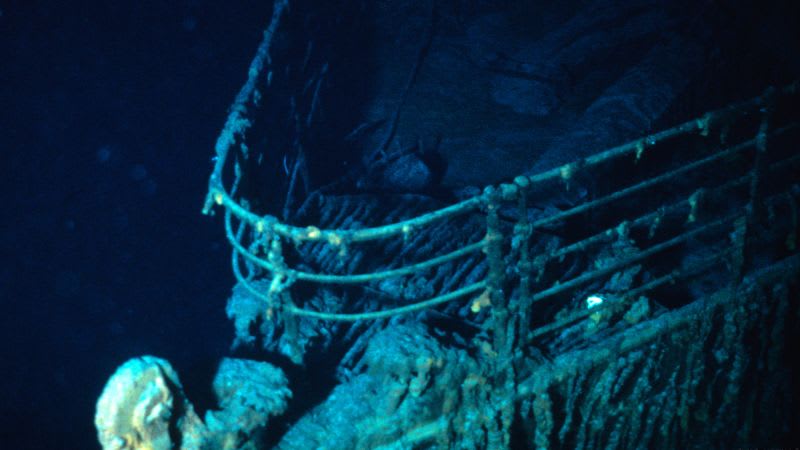
Forty years ago today, on September 1, 1985, oceanographer Robert Ballard achieved what many thought impossible—locating the wreckage of RMS Titanic on the Atlantic seafloor. Yet the story behind this remarkable discovery concealed a truth that wouldn’t emerge for decades: the mission was a cover for a classified Cold War operation to locate two lost nuclear submarines.ground
The US Navy approached Ballard in 1982 with a proposition. They would fund his revolutionary underwater imaging technology, the Argo system, but only if he first completed a classified mission: locate and assess the wrecks of two nuclear submarines, USS Thresher and USS Scorpion, both lost in the Atlantic during the 1960s.ground
The USS Thresher sank in April 1963 during deep-diving tests off Cape Cod, killing all 129 aboard. Five years later, the USS Scorpion vanished on May 22, 1968, taking 99 crew members to a watery grave 400 miles southwest of the Azores. These remained the only nuclear submarines the US Navy had ever lost.flyingfishexhibits
“The Navy didn’t want the Soviets to know they were looking for these subs,” Ballard explained to ABC News. The search for Titanic provided the perfect cover story for intensified American naval activity in the North Atlantic.fascinatedbyshipwreckspodcast
According to CNN, Ballard was placed on temporary active duty and tasked with determining whether the submarines’ nuclear reactors posed any environmental threat and whether Soviet involvement contributed to their sinking. Officials found no evidence of external weapons causing the losses, and both reactors had safely shut down.ground
After completing the submarine surveys, Ballard had just 12 days remaining to search for Titanic. The odds seemed impossible, particularly since a French team using sophisticated sonar had already scoured half the search area without success.ground
But Ballard’s work on the submarine wrecks provided a crucial insight. While mapping the USS Scorpion’s debris field, he observed that heavy objects sank straight down while lighter debris drifted with ocean currents, creating a mile-long trail. This “light-bulb moment” led him to search for Titanic’s debris field rather than the hull itself—a much larger target.businessinsider
Using the Argo underwater imaging system, developed at Woods Hole Oceanographic Institution, Ballard’s team spotted the first images of Titanic’s boiler on their video feeds aboard the research vessel Knorr in the early hours of September 1. The revolutionary technology provided real-time video transmission to the surface, eliminating the need to wait for film development.sciencealert
The classified nature of Ballard’s mission remained secret until 2008, when he finally revealed the truth to National Geographic. “People were so focused on the legend of the Titanic they never connected the dots,” he noted.peoriariverfrontmuseum
Today, as the world marks the 40th anniversary of this historic discovery, new exhibitions are opening across the globe. Titanic Belfast launched a free month-long exhibition on September 1, featuring the National Geographic Explorer’s flag that flew on the 1985 mission. Meanwhile, a traveling exhibition titled “Finding Titanic: The Secret Mission” debuts in Illinois this month.nautiluslive
The revelation that one of history’s most celebrated maritime discoveries emerged from Cold War espionage adds another layer to Titanic’s enduring mystique. As Ballard reflected in his book “The Discovery of the Titanic”: “It was one thing to have won—to have found the ship. It was another thing to be there. That was the spooky part.”