







Newsletter Subscribe
Enter your email address below and subscribe to our newsletter

Enter your email address below and subscribe to our newsletter
All voices matter
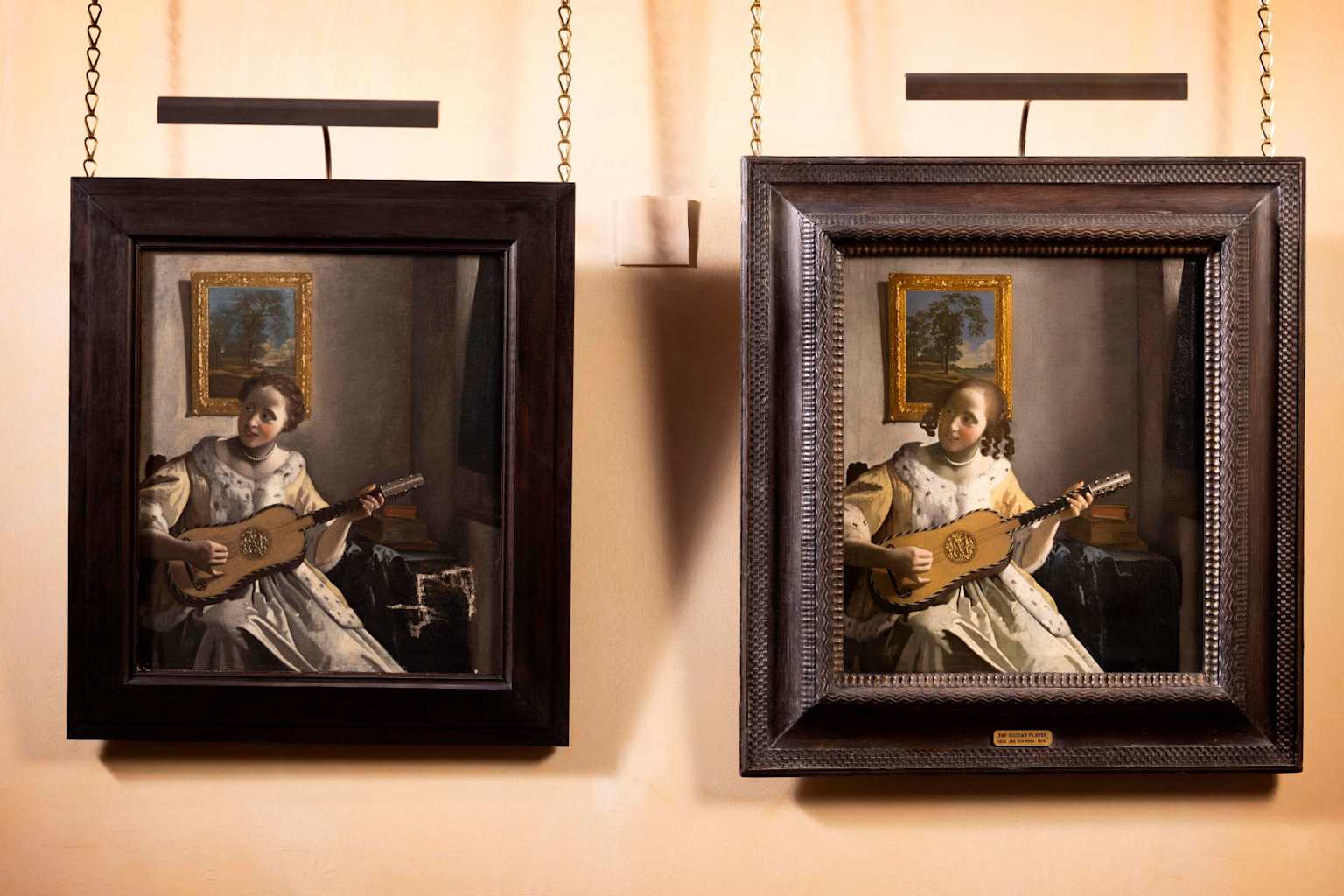
For the first time in over three centuries, two nearly identical paintings of a woman playing guitar are displayed side by side at London’s Kenwood House, reigniting one of art history’s most persistent mysteries. The exhibition “Double Vision: Vermeer,” which opened September 1, 2025, brings together Johannes Vermeer’s authenticated The Guitar Player (1672) with its enigmatic counterpart from Philadelphia Museum of Art, marking the 350th anniversary of the Dutch master’s death.artnet
The London painting, part of the Iveagh Bequest at Kenwood House, stands as one of only 37 works confidently attributed to Vermeer and bears his signature. Its Philadelphia “twin,” known as Lady with a Guitar, has remained the subject of intense scholarly debate for nearly a century, catalogued as “Copy after Vermeer” in the John G. Johnson Collection.english-heritage
Recent scientific investigations have uncovered compelling evidence distinguishing the two works. According to Artnet News, the Kenwood painting was prepared with a pale grey-brown ground made from lead white and chalk, consistent with Vermeer’s other late paintings. In contrast, the Philadelphia version features a dark brown ground composed primarily of burnt umber.artnet
The pigment analysis reveals even starker contrasts. The London version employs natural ultramarine throughout, an expensive blue pigment made from lapis lazuli that Vermeer characteristically used extensively in his work. The Philadelphia painting substitutes cheaper indigo for the blue passages, while using indigo mixed with yellow ochre for the landscape greens instead of the green earth found in the authenticated work.essentialvermeer
These technical findings align with research conducted by teams from the Philadelphia Museum of Art in collaboration with the National Gallery of Art in Washington, DC, alongside new studies by English Heritage and the National Gallery in London.theartnewspaper
The attribution controversy gained momentum in March 2023 when Arie Wallert, former scientific specialist at the Rijksmuseum Amsterdam, presented findings at an international Vermeer symposium suggesting the Philadelphia painting could indeed be by Vermeer himself. Wallert identified traces of ultramarine and lead-tin yellow, arguing these were “combinations that nobody else used at the time”.philamuseum
However, the Philadelphia painting’s condition complicates assessment. Described by Wallert as being in “shocking” condition, the work shows considerable surface damage from aggressive cleaning attempts that likely removed finishing layers of paint. A significant tear in the lower right corner and extensive abrasion have left the painting in what English Heritage describes as a “compromised condition”.artnet
The compositions are virtually identical except for one key difference: the Philadelphia version depicts the sitter without the corkscrew ringlets seen in the London painting. Crucially, while Vermeer signed the Kenwood work, the Philadelphia version lacks his signature.artnet
The exhibition, running until January 11, 2026, represents an unprecedented opportunity for public comparison. According to English Heritage senior curator Wendy Monkhouse, “Since the 1920s, scholars have wondered about the relationship between these two paintings, but this exhibition draws no conclusions, instead inviting visitors to witness the artistry of one of the greatest artists of the 17th century and answer that question for themselves”.finestresullarte
Jennifer Thompson, Philadelphia Museum of Art’s curator of European painting and sculpture, describes the display as providing a “thrilling opportunity” to consider “what science and connoisseurship offer to our understanding of Vermeer and 17th-century painting materials and techniques”.artnet
The Philadelphia Museum continues its collaborative research with Vermeer experts, displaying their painting in its unrestored condition to allow ongoing scientific investigation. As research findings are expected to be published in a forthcoming scholarly article, this historic reunion may finally resolve a century-old mystery about one of art’s most elusive masters.philamuseum